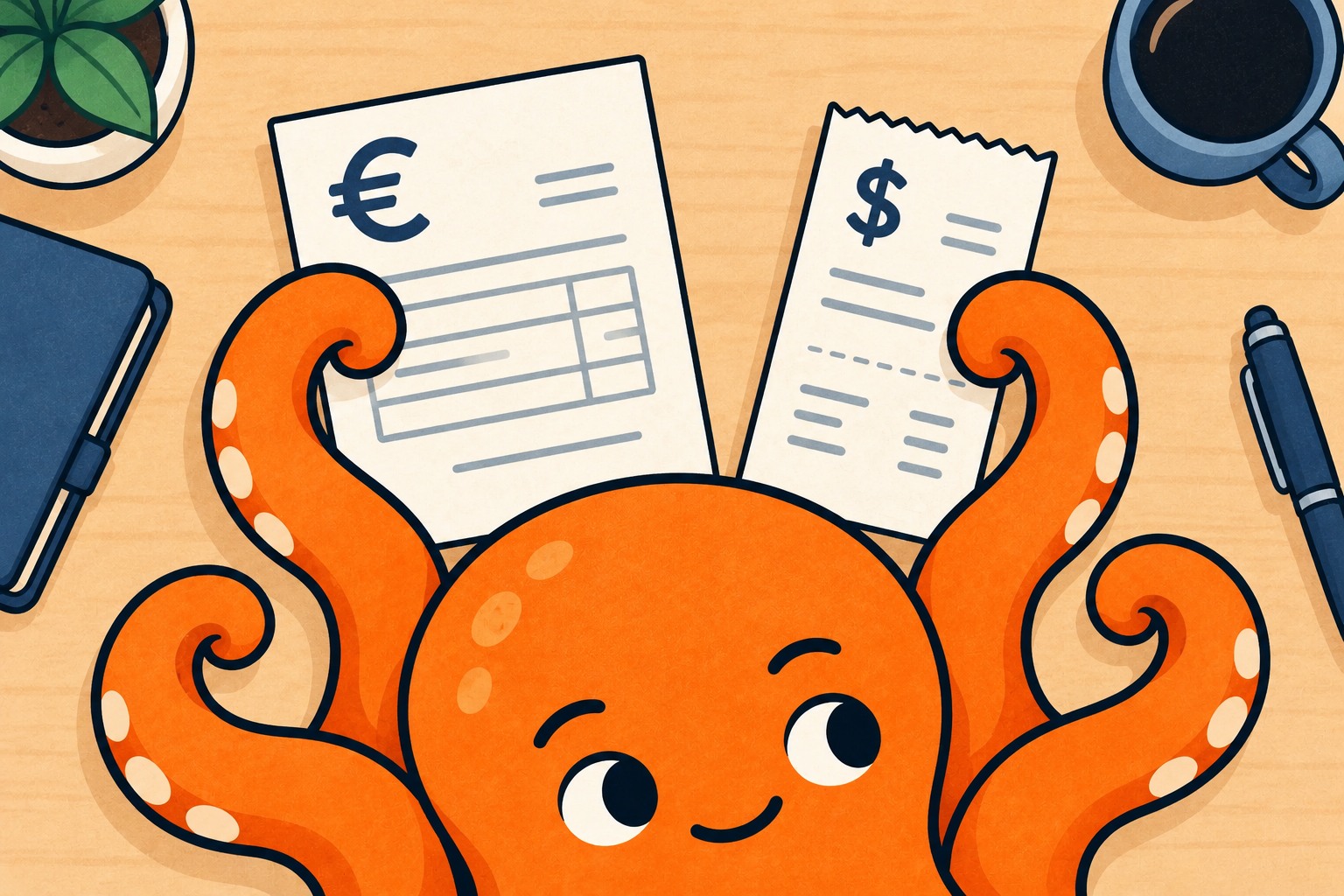
The amounts may be in different currencies
The invoice is in euros, but your bank statement shows Czech koruna. Searching your email for the exact amount in koruna finds nothing, and when you hand over the documents it is unclear whether they belong together. Tracing the path between the purchase, invoice and payment helps more than looking for two identical numbers.
Start with the original document and the actual payment record. Retain the amount, currency, date and available identifier from each. Do not add your own currency conversion to the original invoice.
Look for a connection you can document
Check the order number, invoice number, customer account and payment description. An order confirmation may connect the familiar service name to a different name on the statement. For a recurring subscription, also check the period: the same supplier and a similar amount do not necessarily mean the right month.
If you paid through an intermediary, consider its transaction too. For example, PayPal’s Activity Download report distinguishes the currency, gross amount, fee, net amount and transaction identifier. These are different details and should not be merged into one number. Their meanings are explained in the PayPal report documentation.
Agree with your accountant which statement or export is needed for this purchase. Send it with the original invoice and the available evidence connecting them. Do not choose a random line just because its amount looks approximately right.
Separate a verified connection from a resemblance
In a fictional example, you have an invoice for an annual service for 120 EUR and an outgoing payment of 3,060 CZK on the statement. The order confirmation has the same order number as the invoice and links to the payment service transaction. You can therefore send your accountant the documents with a short note:
‘The invoice and payment are in different currencies. I am attaching the original invoice in EUR, the related statement in CZK and the order confirmation that connects them. I have not changed or converted the amounts.’
If you have no shared identifier and are only inferring the connection from the name and timing, say so explicitly. You can add: ‘I consider this payment a possible match, but I have not confirmed it.’ Your accountant receives a lead to check, rather than a guess presented as a completed match.
When the difference still does not make sense
First check whether you are looking for the whole purchase, part of it, an advance payment or a refund. If you have no document explaining the difference, ask the supplier or payment service about the specific order and transaction. Do not rewrite the invoice amount to make it match the statement.
The article The money has gone out. Why does your accountant still need a document? also explains the general tracing process. When currencies differ, add the original details from each source and a clearly described connection. Then discuss the exchange rate and accounting treatment with your accountant for the specific situation.
The money has gone out. Why does your accountant still need a document? →